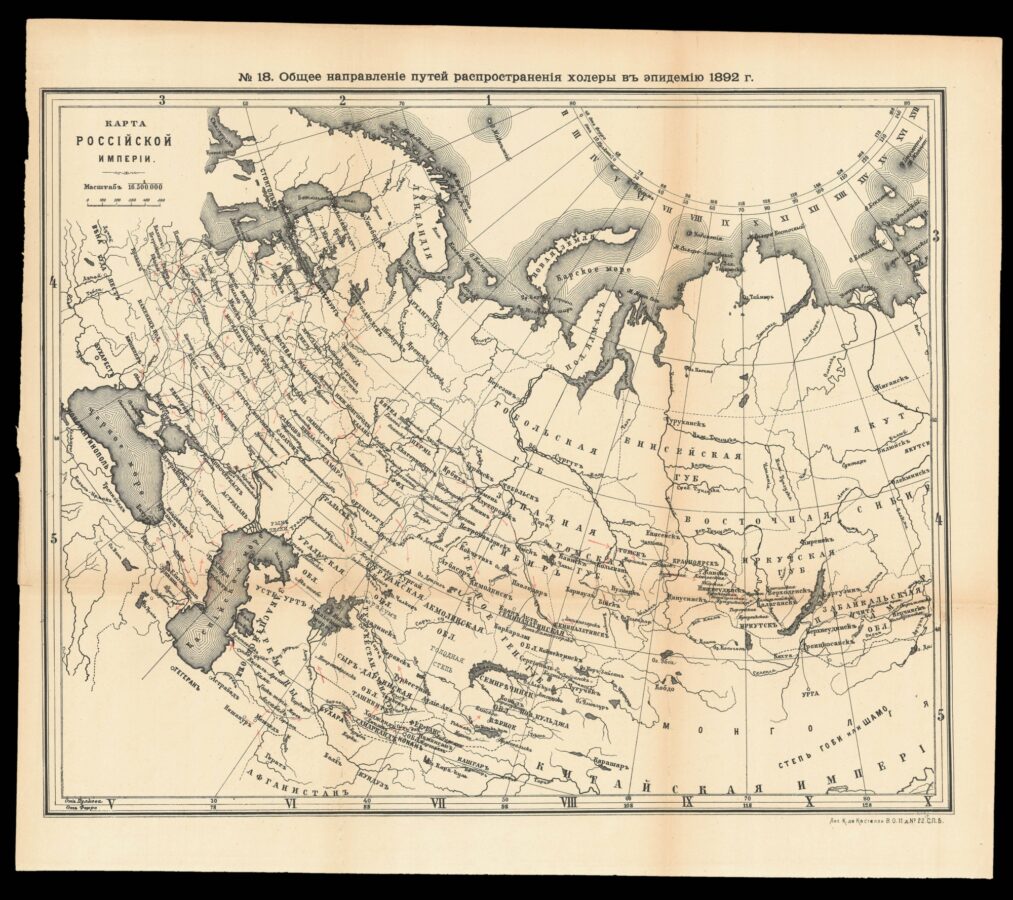
This is a map that was produced in 1893 by C. de Casrelli in St. Petersburg depicting with red arrows the progression of the Cholera epidemic that devastated Russia in 1892. It claimed 200,000 lives and was part of a global pandemic (the 7th cholera pandemic of the 19th century). This map illustrates a general southeastern to northwestern movement of cholera across Russia. This is significant for my project as it shows similarities in movement to the 1346-1353 Black Plague origins and transmission routes as well as the 1921 malaria origins and routes across Russia. Research confirms that climate played an important factor in all three epidemics in creating the conditions for both ideal disease incubation and increase modes of transmission. Of the three maps, the 1943 malaria map best illustrates the areas where high levels of outbreak occurred. All three diseases moved across Russia using established trade, communication, and transportation routes. There is a difference in the speed of travel between the Black Plague which took decades to travel across central and southern Russia before hitchhiking the sea trading routes of the Black Sea and the cholera and malaria epidemics which used rail and roadways to travel across Russia within a year.