Browse Items (173 total)
Sort by:
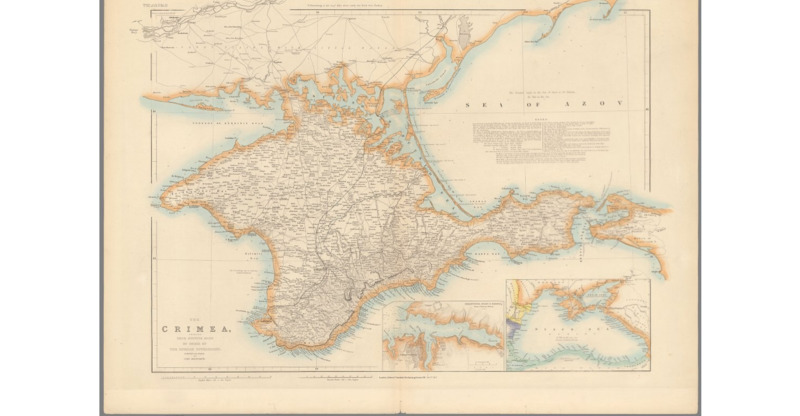
This map is important because it shows the connections between port cities on the Tauric Peninsula and their hinterlands. This map shows Sevsatopol in a larger context, which hints at the reasons for its strategic location as a naval port on the…
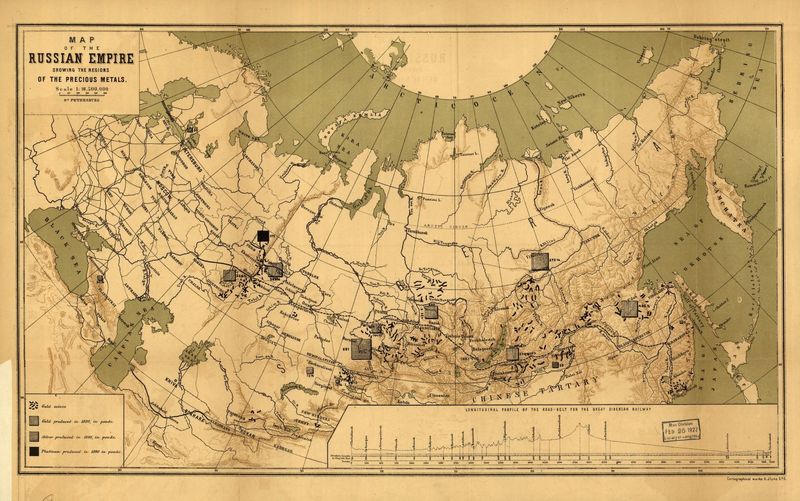
In 1890, Jlyne created this visual representation of the production of precious metals across the landscape of the Russian Empire. The map is centered on the Siberian territory with a clear landscape view starting from Warsaw in the far west…
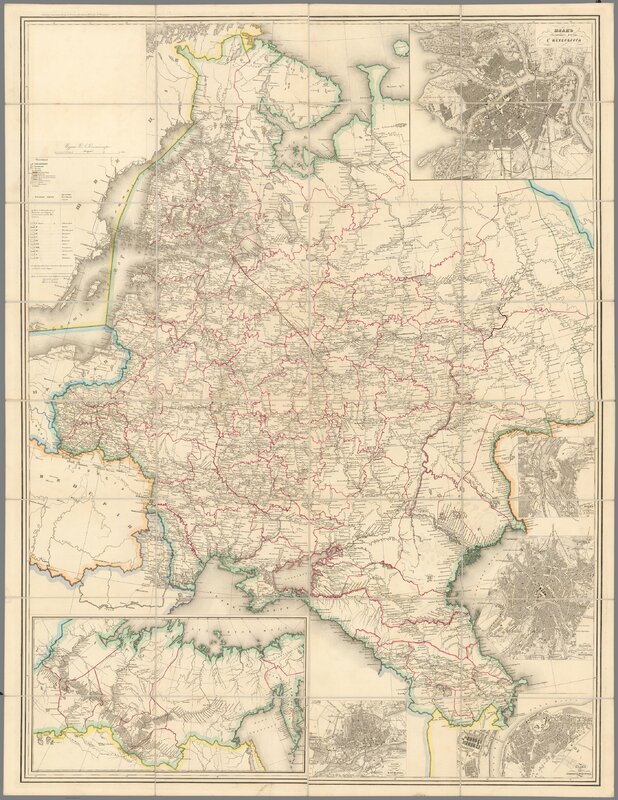
This map from 1854 places Nizhni-Novgorod in context of the transportation system (rail and road) of the Russian Empire as a whole. It shows its geographical significance as a major transportation hub within the Empire by receiving its own inset, 1…
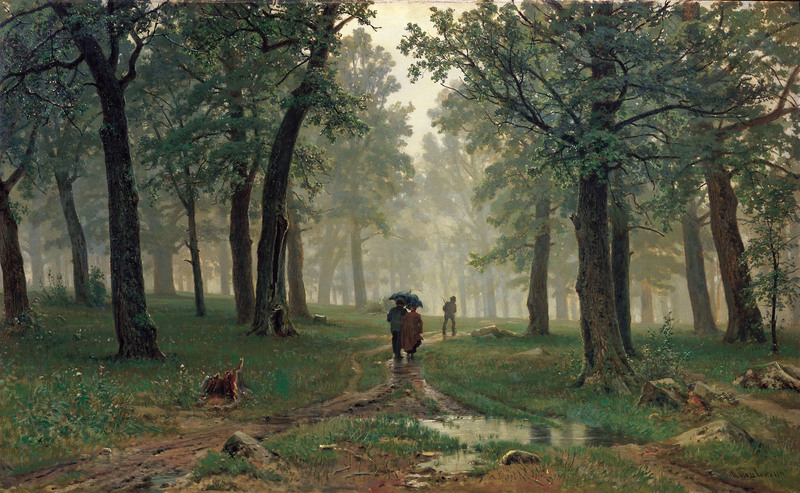
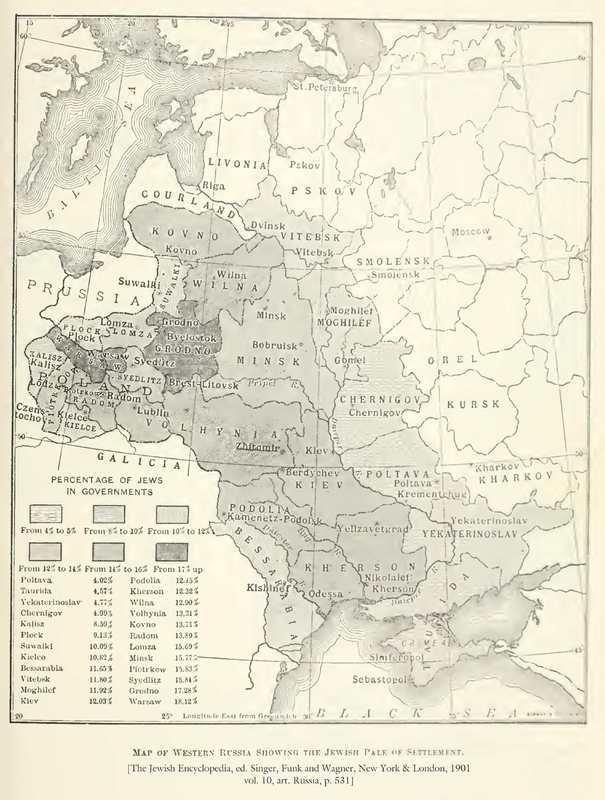
The Russian Empire was a multinational state, and the Jews were a significant minority group in the empire. The Tsarist government imposed many restrictions on the Jews, including geographical confinement. Jews had to live in the Pale of Settlement,…
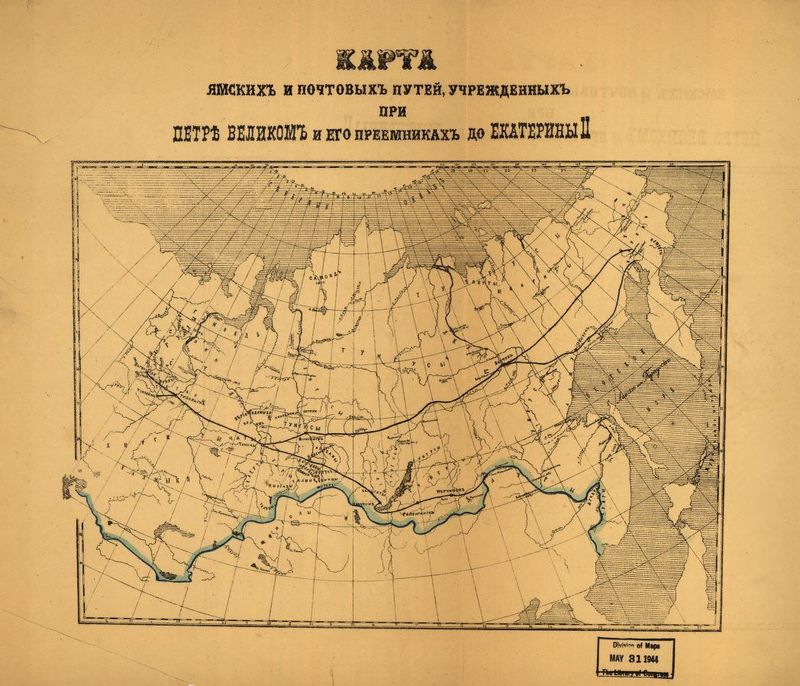
The postal road map hints at population density, data not readily available from other types of sources. On top of density, it also captures the shape of population distribution within a given region (This claim is not based on any serious research;…
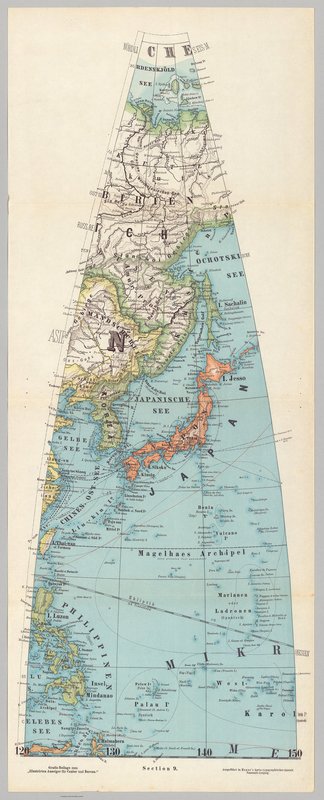
The map “Section 9 Henze’s Urde-Globus” is one of 24 globe gores printed on thin paper. According to the David Rumsey Collection, between 1885 ad 1890 the magazines included segments for a German terrestrial globe, which–when collected in their…